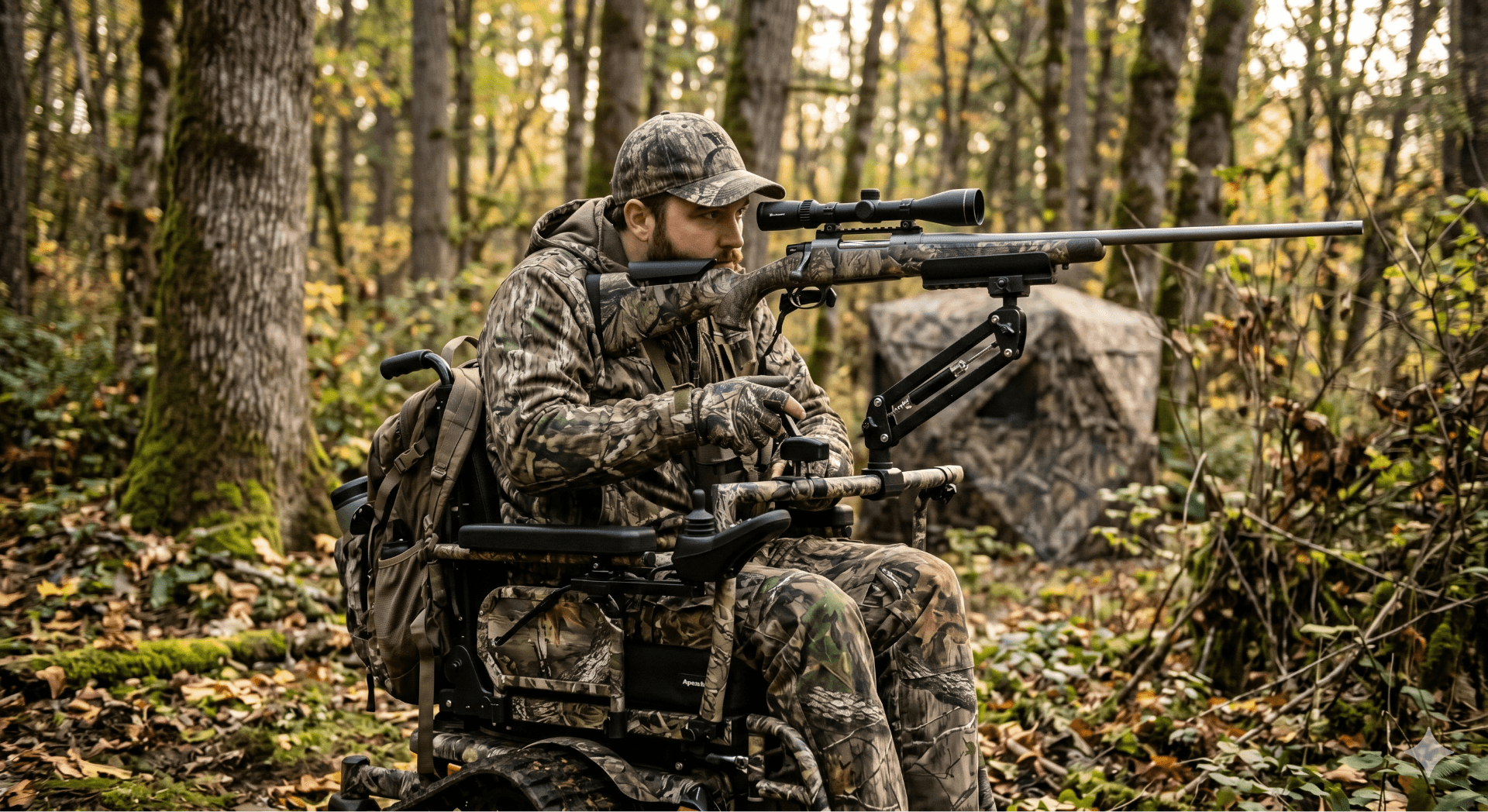
I spent my career in the elevator industry, where a fraction of an inch determines whether a lift functions or leaves someone stranded. In the field, the stakes are different, but the engineering challenge remains the same. Whether you are dealing with a permanent injury or just the wear and tear of a life well-lived, the goal is simple: get back into the woods on your own terms.
Adaptive hunting equipment isn’t about charity or assistance; it is about mechanical advantage. It is about taking the technical knowledge I gained as a Marine mechanic and as a board member for the National Association of Elevator Contractors and applying it to the backcountry. If you can build a system that moves a car safely between floors, you can build a system that gets a hunter into a blind without help. Let’s talk about how to bridge that gap.
Why Adaptive Hunting Gear Matters for Autonomy
The outdoors provides a kind of therapy you cannot find in a gym or a clinic. When I look at adaptive hunting gear, I don’t see limitations. I see a design problem waiting for a solution. The industry has finally started catching up, moving away from bulky, unsafe modifications and toward high-grade, reliable mechanical solutions.
True independence means you don’t need a buddy to help you into your stand or to lug your gear through the mud. It means having the right tools to navigate the terrain and the right platform to make the shot. When you remove the physical barrier, you can focus on the hunt. That is the only thing that matters.
What is the best vertical platform lift for hunting?
The best vertical platform lift for hunting is one that utilizes non-proprietary, field-serviceable components and adheres to basic ASME A18.1 safety standards for platform lifts. You need a system that uses a reliable hydraulic or screw-drive mechanism, which offers the precision control required for uneven forest floors.
In my experience with elevator controls, simplicity is reliability. Look for a unit that features a manual override, a high-cycle duty motor, and weather-sealed limit switches. If you are building a custom setup, ensure the frame is constructed from 6061-T6 aluminum or powder-coated structural steel to prevent corrosion. Never compromise on the structural integrity of your lifting platform; if it cannot handle a 4:1 safety factor, leave it at home.
Designing Your Own Lifting Solution
If you are handy with a welder or a wrench, you might be tempted to build your own disabled hunter equipment. I respect that. Just remember the physics. A vertical lift needs a solid base—usually a concrete pad or a heavy-duty pressure-treated timber cribbing—to ensure the load is distributed evenly.
Use a 12V DC motor if you are running off a battery bank, but keep your wiring runs short to minimize voltage drop. Use marine-grade heat shrink on every connection. If you are using a hydraulic cylinder, ensure you have a flow control valve installed. This prevents a rapid descent if a hose fails. It is the same principle we use in commercial elevator valve banks to ensure passenger safety.
How can I make my hunting stand more accessible?
Making a stand accessible requires converting vertical movement into a manageable, safe process using handicap hunting equipment like ramps, winches, or specialized platform lifts. Start by evaluating the slope of your terrain and the height of your shooting platform. A standard ramp should never exceed a 1:12 slope ratio to ensure you can manage the ascent without exhausting yourself before the sun comes up.
If space is tight, look into a vertical lift or a cantilevered platform. These systems allow for a smaller footprint while providing a stable, level surface. Always install handrails that are at least 34 inches high and include a mid-rail. If you are using a winch-assisted system, ensure the cable is rated for at least double the weight of you and your gear. Use a secondary safety brake—a “dog and ratchet” system—to lock the platform in place once you reach the desired height.
Refining Your Setup for 100% Independence
I have seen guys struggle with gear that wasn’t designed for their specific needs. If you are using a wheelchair or a mobility aid, your disabled hunter gear needs to be modular. Mount your weapon rest directly to the frame of your lift or blind. This eliminates the need to hold the weight of the firearm while you are positioning yourself.
Think about your “reach zone.” Everything you need—your rangefinder, your calls, your snacks—should be within a 12-inch radius of your seated position. I often use magnetic mounts or quick-release clips. These allow me to move gear around without fumbling with zippers or buckles. Efficiency in the stand is just as important as efficiency in the shop.
Advanced Modifications for the Mobile Hunter
Sometimes the best adaptive hunting equipment isn’t a massive lift; it’s a modification to your existing transport. I spent years fixing amphibious assault vehicles and elevators, so I know that if a machine is fighting you, you are doing it wrong. Replace standard manual door latches on blinds with lever-action handles. These are much easier to operate if your grip strength is compromised.
Consider the “swing-away” mount for your optics. If you use a tripod, look for a fluid head that allows for one-handed adjustments. I prefer heads with a tension-adjustment knob. This lets me lock the optic into place, scan the horizon, and then make a fine adjustment without having to loosen and retighten everything. It is about maintaining control over the environment.
The Importance of Field-Serviceable Components
When you are miles from the nearest road, you don’t want proprietary tech that requires a factory technician to fix. Whether it’s a vertical platform lift for hunting or a simple gear-hauling sled, stick to parts you can source at a local hardware store. I use standard grade-8 hardware for all structural connections. It is overkill, but it gives me peace of mind.
Carry a basic “field kit” that includes a multi-tool, a roll of electrical tape, a few spare bolts, and a small tube of anti-seize. If you are using hydraulics, keep a spare quart of compatible fluid. If you can fix it in the field, you never have to cut your hunt short. That is the definition of radical independence.
Selecting the Right Gear: A Mentor’s Advice
When you start researching adaptive hunting gear, you will find a lot of flashy marketing. Ignore it. Look for the gear that has been tested in the mud, the rain, and the cold. Ask the manufacturer about their pivot points. If they use plastic bushings in a load-bearing area, move on. You want brass, bronze, or sealed ball bearings.
I always look at the finish. If it’s painted, it will eventually rust. If it’s galvanized or powder-coated, it will last. I’ve spent my life maintaining equipment that lives in harsh environments—elevator pits are essentially dark, damp, steel-filled caves. The same rules apply to your hunting gear. If it can handle the moisture, it can handle the hunt.
Safety Protocols for the Solo Hunter
Being independent doesn’t mean being reckless. Even with the best handicap hunting equipment, you need a safety plan. I always carry a satellite communicator. I also make sure someone knows exactly where my blind is located. If I am using a lift, I perform a “dry run” every season before the first hunt.
Check your cables for fraying, your hydraulics for leaks, and your bolts for tightness. In the elevator trade, we call this a pre-ride inspection. Do not skip it. Your gear is your lifeline. Treat it with the respect it deserves, and it will take care of you.
Final Thoughts on the Pursuit
The woods don’t care about what you can or cannot do. They only care that you show up. If you have to engineer a way to get there, then engineer it. Use your head, use your hands, and don’t let anyone tell you that you don’t belong out there. The gear is just a tool, but the drive to be in the outdoors is what makes you a hunter.
I have spent my life building systems that help people move safely. I’ve seen enough to know that there is always a way to make it work if you are willing to put in the time. Build your rig, test your setup, and get back out there. The season is waiting.
Good hunting. See you afield.