When I was a Marine Lance Corporal in Iraq, fixing vehicles on the fly, I learned a core lesson: you find a problem, you build a solution. That same grit, that drive to make things work, has stuck with me through my years in the elevator business. It’s the same spirit I bring to the outdoors, especially when it comes to something as vital as wheelchair accessible hunting blinds.
Hunting, for me, is more than a sport. It’s therapy. It’s where I find peace, challenge, and connection with nature. And nobody should be locked out of that experience. We’re not just talking about getting into the woods; we’re talking about achieving true independence in the field. I’ve seen the struggle firsthand, and I’ve learned how to engineer better ways. This isn’t about pity; it’s about empowerment.
Why True Independence in Wheelchair Accessible Hunting Blinds Matters
I’ve spent decades in the elevator industry, first as a mechanic, then building my own company, Right Way Elevator Maintenance. My work has always been about enabling movement and access. It’s about precision, safety, and reliable operation. When I look at hunting, I see the same principles apply.
The goal isn’t just to get you into a blind. It’s to get you there, get you comfortable, and allow you to operate 100% unassisted if that’s your aim. That’s radical independence. It’s what we all strive for in the field. A good wheelchair accessible hunting blind isn’t just a structure; it’s a launchpad for autonomy.
What Dimensions Are Needed for a Wheelchair Accessible Hunting Blind?
The first thing I learned when designing access solutions, whether for an elevator or a hunting blind, is that dimensions are everything. You can’t guess. You need exact measurements for safety and usability.
For a truly effective wheelchair accessible hunting blind, you need significantly more interior space than a standard blind. A minimum interior dimension of 6 feet by 6 feet is a good starting point. This gives you room to maneuver, turn, and position your chair without feeling cramped.
Doorways are critical. I recommend a minimum clear opening of 36 inches wide. This isn’t just for the chair itself, but for you to comfortably pass through with gear. Make sure the threshold is flush with the floor, or as close as possible, to eliminate any tripping or jamming hazards.
Designing Your Ultimate Wheelchair Hunting Blind
Building a custom solution, whether it’s an elevator system or a hunting setup, requires forethought. We’re aiming for robust design here, something that stands up to the elements and provides years of reliable service. My experience troubleshooting complex hydraulic and electronic systems taught me that the foundation has to be solid.
When I think about a wheelchair hunting blind, I consider it an extension of your body in the field. It needs to be stable, secure, and perfectly tailored to your needs. This isn’t just about comfort; it’s about safety and effectiveness.
Ramp Design and Construction for Wheelchair Access
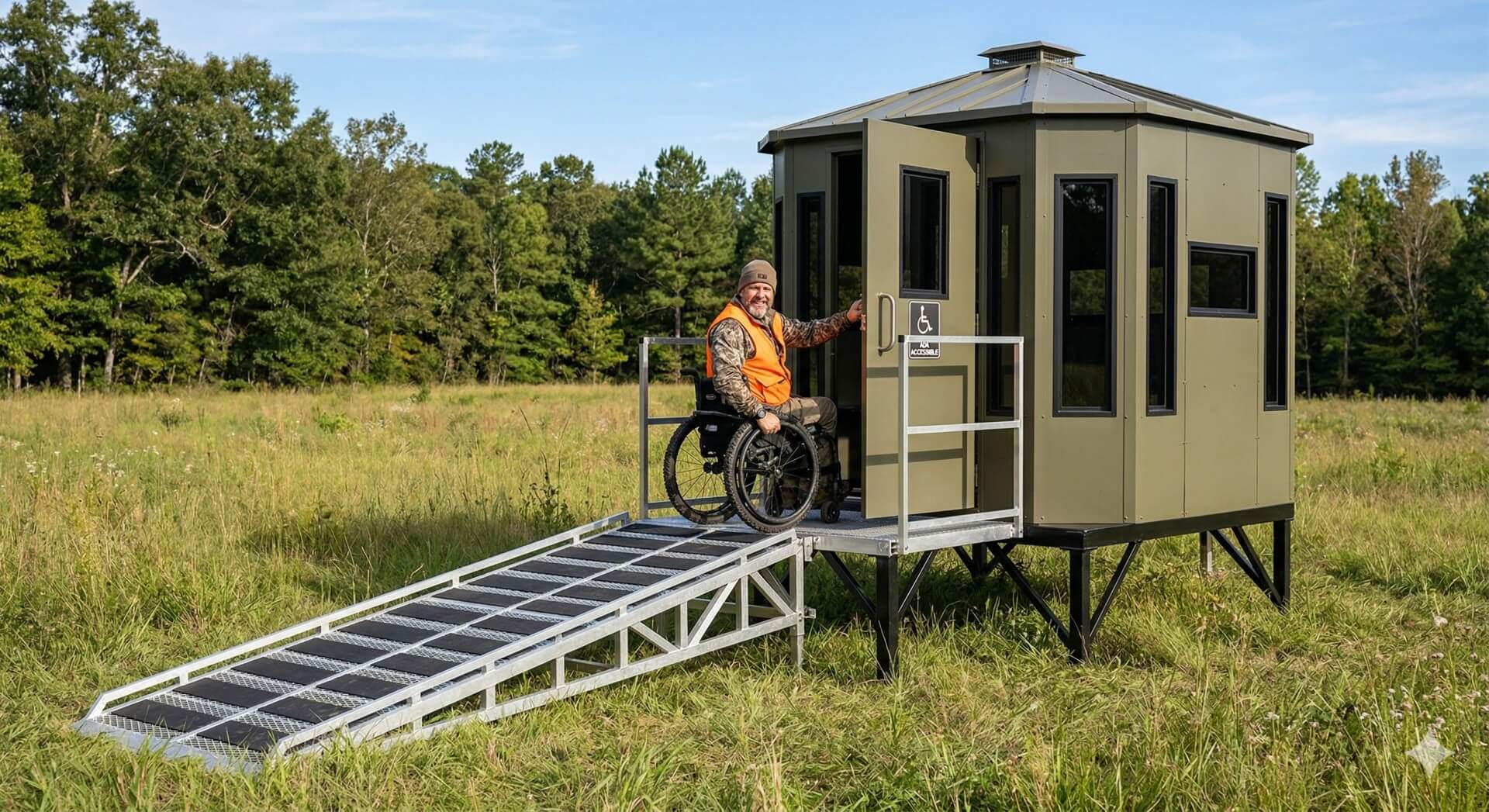
A well-designed ramp is non-negotiable for any wheelchair accessible ground blind or elevated tower. This is where my elevator experience really kicks in. We deal with load capacities and smooth transitions daily.
The Americans with Disabilities Act (ADA) guidelines suggest a maximum slope of 1:12. This means for every 1 inch of rise, you need 12 inches of run. For a blind floor that’s 24 inches off the ground, you’d need a ramp at least 24 feet long. That might sound like a lot, but it ensures a safe and manageable ascent, especially when you’re alone.
Ramp width should ideally match your doorway: 36 inches clear. Include handrails on both sides, extending beyond the top and bottom of the ramp. These aren’t just for pulling yourself up; they’re critical for stability and preventing accidental falls off the side. The surface needs to be non-slip, even when wet or icy. Think about using pressure-treated lumber with grit strips, or rubber matting.
What Materials Make the Best Wheelchair Hunting Blind?
Just like a well-built elevator, a strong hunting blind starts with good materials. You want durability, weather resistance, and low maintenance.
Pressure-treated lumber is a solid choice for the frame and floor. It resists rot and insects. For walls, consider marine-grade plywood or exterior-grade OSB, wrapped in a weather-resistant barrier like Tyvek, then finished with durable siding. Metal siding or even composite decking materials can offer excellent longevity.
The roof needs to shed water effectively. A sloped metal roof is ideal. It’s durable, sheds snow and rain, and lasts for decades. I always recommend a slight overhang to protect the walls and ramp entrance.
Elevated Handicap Hunting Towers: Reaching New Heights
Sometimes, you need to get above the brush. That’s where elevated handicap hunting towers come into play. This is where my expertise with vertical transport really becomes valuable. Building a stable, safe elevated platform takes careful engineering.
When I was running Ballard Custom Elevators, we built custom solutions for all kinds of challenges. The principles for a safe hunting tower are similar: a solid foundation, robust structural integrity, and secure access.
Structural Integrity and Foundation for Elevated Blinds
An elevated blind isn’t just a shed on stilts. It’s a precisely engineered structure. Just like an elevator shaft, the base needs to be perfectly level and incredibly strong.
I recommend pouring concrete footers for each support post. These footers should extend below the frost line in your area to prevent shifting. Use heavy-gauge steel or pressure-treated 6×6 posts for the main supports. Cross-bracing is absolutely essential. Think about the forces at play: wind, snow load, and the dynamic weight of a hunter and gear. Diagonal bracing on all four sides, from the ground up to the blind floor, will prevent sway and provide critical stability.
All connections should use heavy-duty bolts and hardware, not just screws. Over-engineer it. You can’t be too safe when you’re 10 or 15 feet off the ground.
Lift Systems for Handicap Hunting Towers
For taller elevated blinds, a ramp might be impractical due to its length. This is where mechanical lift systems come in. My background in elevators gives me a unique perspective here.
While a full-blown commercial elevator isn’t feasible, a well-designed platform lift can be. Look for heavy-duty, outdoor-rated vertical platform lifts. These are essentially small, open-air elevators designed for accessibility. They require a dedicated power source (battery or solar-charged battery systems are common in remote areas) and regular maintenance.
Safety features are paramount: emergency stop buttons, non-skid platforms, safety gates, and manual override capabilities. Always ensure the lift meets local safety codes, even if it’s on private land. I’ve seen enough close calls in my career to know that cutting corners on safety is never worth it.
Building Your Own vs. Pre-Built Wheelchair Accessible Ground Blinds
Just like with elevators, you can build from scratch or buy pre-fabricated. Both have their merits, and I’ve overseen projects of both types.
A custom-built wheelchair accessible ground blind allows you to tailor every single dimension and feature to your exact needs. This is often the best route for truly radical independence. You control the materials, the layout, and the quality of construction.
Pre-built options are becoming more common. Many manufacturers now offer lines specifically designed for accessibility. These can be a good starting point, but always scrutinize the specifications. Does the door opening meet your needs? Is the interior space sufficient? Is the ramp slope manageable? Don’t assume “accessible” means “perfectly suited for you.”
Key Features to Look for in Pre-Built Accessible Blinds
When you’re evaluating pre-built options for a wheelchair accessible ground blind, think like an inspector.
- Door Width: Again, 36 inches clear opening is the standard I recommend.
- Interior Space: Aim for that 6×6 foot minimum. Some blinds might claim accessibility but are still too small for comfortable maneuvering.
- Window Design: Windows need to be low enough for a seated hunter to use effectively. They should also open and close quietly and easily with one hand. Some offer horizontal sliding windows, which can be ideal.
- Ramp Integration: Check the ramp’s slope and width. Is it sturdy? Does it have handrails? Is the surface non-slip?
- Ventilation: Proper airflow is important to prevent condensation and keep you comfortable.
- Sound Dampening: Quality materials can help reduce noise, keeping you hidden from game.
Ensuring Safety and Longevity in Your Hunting Blind
My work in elevator maintenance taught me that even the best-built systems need care. A hunting blind is no different. You’ve invested time, money, and effort into creating this space for independence. Protect that investment.
How Do You Ensure Safety in a Wheelchair Accessible Ground Blind?
Safety is always my top priority. Whether it’s an elevator shaft or a hunting blind, you have to anticipate potential hazards.
For ground blinds, ensure the area around the blind is clear of obstacles that could impede wheelchair movement. The ramp should be checked regularly for wear, loose fasteners, or uneven settling. Inside, keep the floor clear. Secure any loose items that could become tripping hazards.
For elevated handicap hunting towers, the stakes are higher. Inspect all structural connections annually. Check for rust on metal components, rot on wood, or any signs of loosening. Test any lift systems thoroughly before each hunting season. Batteries should be charged, and all safety features verified. Just like I’d never sign off on an elevator without a full inspection, don’t enter a tower without confidence in its integrity.
Maintenance Tips for Your Accessible Hunting Blind
Regular maintenance extends the life of any structure.
- Annual Inspection: Check all fasteners, wood for rot, metal for rust. Tighten bolts as needed.
- Weatherproofing: Reapply sealants around windows and doors every few years. Inspect roof integrity.
- Ramp Care: Keep the ramp clear of debris. Repair any damage to the non-slip surface.
- Pest Control: Keep critters out. Seal gaps and consider using pest deterrents.
- Cleanliness: A clean blind is a pleasant blind. Sweep out leaves, dirt, and dust.
Treat your blind like the valuable piece of equipment it is. It’s your gateway to the outdoors, your personal piece of wilderness therapy.
The Spirit of the Outdoors
From my days in the Marine Corps, fixing what was broken, to building a successful elevator company, I’ve always believed in finding solutions. The outdoors, for me, has always been the best recreational therapy in the world. It clears the head, challenges the spirit, and reminds you what truly matters.
Building or adapting a wheelchair accessible hunting blind isn’t just about constructing a shelter. It’s about constructing opportunity. It’s about refusing to let barriers stand in the way of passion. It’s about getting back out there, experiencing the quiet thrill of the hunt, and finding your independence in the wild.
I hope these insights, drawn from years of problem-solving and engineering, help you build your perfect setup. Don’t settle for less than total autonomy.
See you afield.