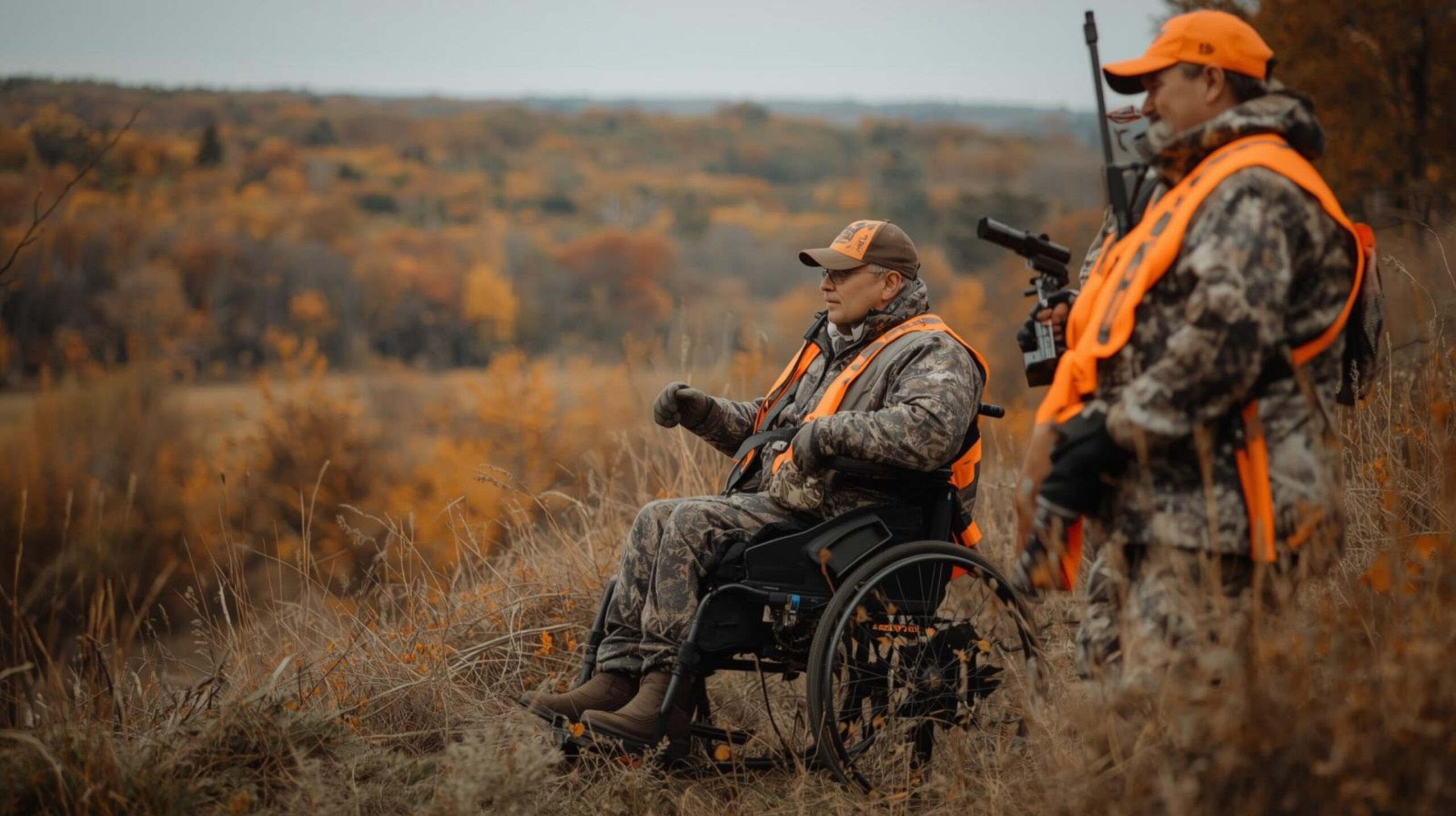
For hunters relying on wheelchairs, track chairs, or dealing with limited mobility, getting back into the woods is about one thing: reclaiming independence.
For years, the standard industry “fix” for making an elevated wheelchair-accessible hunting blind was building massive wooden ramps. While well-intentioned, these DIY structures are often exhausting to navigate, visually disruptive to the hunting environment, and, worst of all, incredibly dangerous.
If you are a disabled veteran, an aging outdoorsman, or a lodge owner looking to make your lease accessible, it is time to look past the lumber. Here is why traditional wooden ramps are failing hunters with limited mobility, and how modern mechanical alternatives like vertical platform lifts (VPLs) are changing the game.
Why Long Wooden Ramps Fail Hunters with Limited Mobility
The Geometry Problem (ADA Ratios in the Woods)
To build a safe wheelchair ramp, the standard ADA guideline requires a 1:12 slope ratio—meaning for every one inch of rise, you need one foot of ramp length.
When you apply this to a hunting context, the math gets absurd. If you want to safely reach a standard 10-foot elevated blind, you would need a continuous ramp that is 120 feet long. Building steep, non-compliant ramps to save space creates severe tipping hazards, especially for heavy, motorized track chairs.
Weather and Environmental Hazards
The reality of the hunting environment is harsh. Morning frost, heavy rain, falling leaves, and boot mud turn treated wood into a severe slip hazard. Pushing a manual chair up a slick 30-degree incline is an accident waiting to happen. Furthermore, the maintenance nightmare of preventing wood rot and warping over time in harsh outdoor conditions makes long-term upkeep expensive and frustrating.
The Myth of Independence
The ultimate goal of accessible hunting gear is to allow you to hunt on your terms. Relying on a buddy to push you up a steep incline—or exhausting yourself trying to manually wheel up a long, winding wooden structure—defeats the entire purpose of an independent hunt.
The Modern Solution: Vertical Platform Lifts (VPLs) in the Woods
What is a VPL for Hunting?
Thanks to innovations in commercial elevator technology being adapted for off-grid outdoor use, hunters no longer have to rely on ramps. A Vertical Platform Lift (VPL) operates exactly as it sounds: you roll your wheelchair or track chair onto a heavy-duty ground-level platform, press a button, and quietly ascend directly to the door of your blind.
Maximizing Stealth and Space
Deer and other game are highly sensitive to environmental changes. A 120-foot wooden ramp requires clearing a massive runway through the brush, leaving a huge physical footprint. A VPL eliminates this entirely, allowing you to tuck your blind tightly into the natural cover and maintain stealth.
What to Look for in a Mechanical Deer Stand Lift
Not all mechanical lifts are created equal. Agricultural hoists or homemade winch systems can be just as dangerous as rotting wood. If you are investing in a vertical platform lift for hunting, look for these three non-negotiables:
1. Commercial-Grade Safety (ASME 18.1 Compliance)
Never trust your safety to a DIY rig. The best accessible hunting towers are engineered by professionals with commercial elevator industry backgrounds. Ensure the lift system you choose adheres to strict safety codes like ASME 18.1, featuring built-in failsafes, smooth mechanics, and secure locking gates.
2. Off-Grid Reliability: Solar-Powered Systems
You cannot plug a lift into a tree. A premium accessible deer stand will feature a reliable 12V battery system charged via integrated solar panels. This ensures your lift always has the juice it needs to get you up in the morning and safely back down at night, no matter how deep off-grid you are.
3. Heavy-Duty Steel vs. Aluminum Construction
When you combine the weight of a hunter, winter gear, and a heavy motorized track chair, you need absolute stability. Avoid lightweight, swaying aluminum frames. Look for powder-coated steel towers with massive weight capacities (upwards of 2,500 lbs). Heavy steel ensures zero sway in the wind, providing the rock-solid stability you need for precision shooting.
Frequently Asked Questions
-
Can a track chair fit in an elevated hunting blind? Yes, provided the setup is explicitly designed for it. Look for blinds that feature wide, heavy-duty doorways and an integrated “porch” area between the lift and the blind, giving you the turning radius needed to maneuver inside.
-
How do you lift a wheelchair into a deer stand? The safest and most independent method is using a battery-operated vertical platform lift (VPL) attached to a heavy-duty steel tower, entirely bypassing the need for ramps or manual lifting.
-
Are elevated hunting blinds safe for older hunters? Absolutely. When equipped with commercial-grade lifting mechanics or motorized stair chairs rather than steep ladders or slippery wooden ramps, elevated hunting becomes highly safe and accessible for hunters losing their mobility.
Don’t let mobility limitations or dangerous DIY setups keep you out of the woods. Reclaim your independence with a heavy-duty, wheelchair-accessible hunting tower engineered for absolute safety and stability.